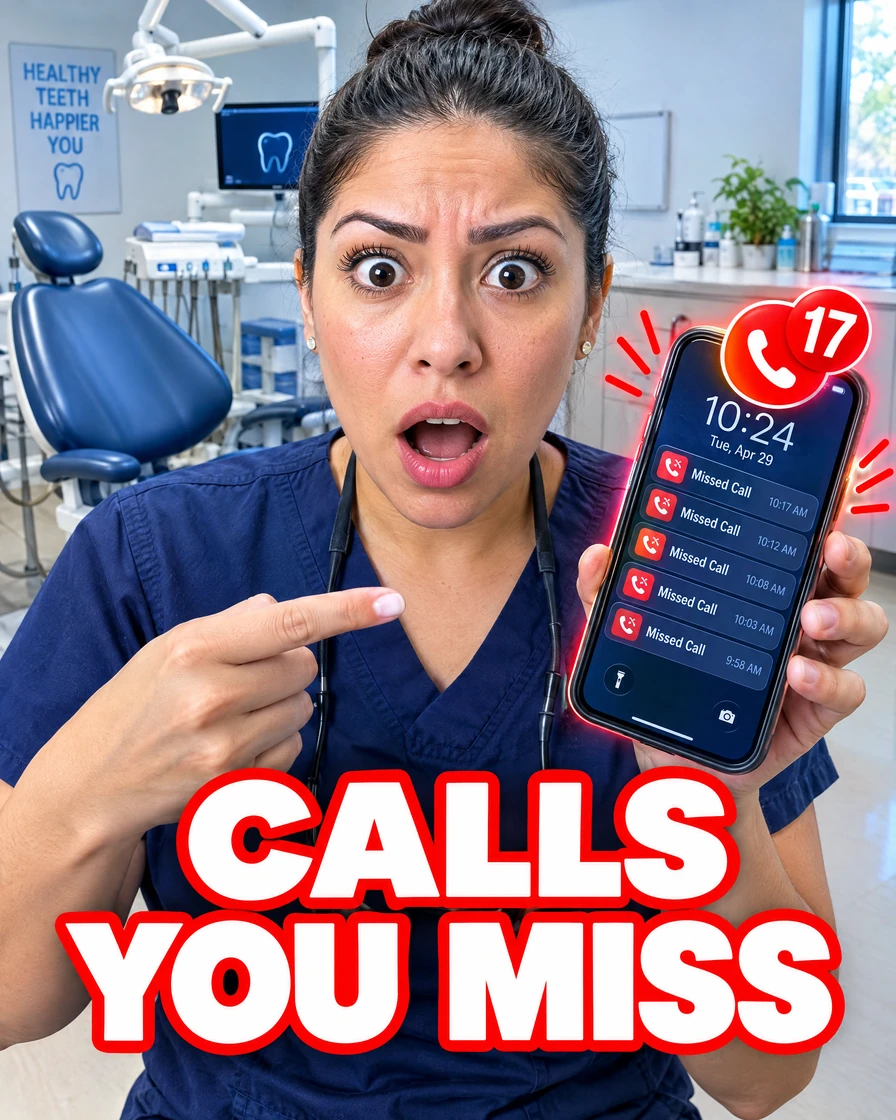
The calls your dental practice misses
The calls your dental practice misses while the chair is occupied — and the agent we built to answer them
The phone rings at 11:42 on a Tuesday while the one person on your desk is taking a card payment, booking a recall and answering the door buzzer. It rings out. Nobody leaves a message — someone with a throbbing molar is working down the list their phone showed them — and by the time the desk is clear the appointment exists somewhere else.
Every practice has a version of this. The phone does not ring when the desk is free. It rings in the ten minutes after a surgery finishes, when one person is taking a card payment, booking a six-month recall and answering the door buzzer at the same time — and it rings again while she is still on the first call.
The caller does not leave a message. Someone with a throbbing molar is not composing a voicemail; they are working down the list of practices their phone showed them. By the time the desk is clear enough to check, the appointment exists somewhere else.
The part that is invisible is the cost. A call that rang out leaves nothing behind. There is no line in your practice software that says a new patient rang at 11:42 on Tuesday, waited nineteen seconds, and rang the practice on the high street instead. The number of those is not zero, and you cannot see a single one of them.
Out of hours is the same problem with a longer gap. Pain does not keep office hours. A Friday-evening call about a swelling reaches Monday morning as a voicemail, by which point the person has either been to an out-of-hours service or has stopped being your patient.
What follows is how to build a phone line that answers those calls in your practice's own words — NHS or private answered straight, treatments by the names patients actually use, pain triaged rather than slotted — using tools that exist today and cost less per month than a nurse's day rate.
How it is built, in full
What the agent actually has to do
A dental enquiry is not a generic enquiry. Four things come up on nearly every call, and an agent that cannot handle them properly is worse than a ringing phone.
It has to triage pain before it does anything else. This is the one that matters, and the one where a careless build does real harm rather than merely disappointing someone. Swelling that has spread to the eye or the floor of the mouth, a tooth knocked out whole, trauma after an accident, bleeding that will not stop — none of these are booking enquiries. The agent's job is to recognise the words a frightened person actually uses, take the details, and flag it immediately, rather than politely offering the next available check-up in three weeks. A knocked-out adult tooth in particular is measured in minutes, and an agent that treats it as a scheduling problem has done real harm.
It has to answer the NHS question honestly, in the first thirty seconds. For a large share of callers it is the only question. Are you taking on NHS patients? If the answer is no, saying so immediately is the respectful outcome for both sides — and a practice that lets an agent be vague about it will collect complaints instead of patients. If the answer is a waiting list, the agent says how long and offers to add them.
It has to know the words patients use, not the words on the treatment plan. Nobody rings up asking about an extra-coronal restoration. They ask about a cap, a plate, having a wisdom tooth out, a filling that has come away, a brace for their daughter. The knowledge base is written in the patient's vocabulary with your clinical terms mapped underneath, not the other way round.
It has to handle fees without inventing one. Callers ask what it costs. For NHS work the band is a fact and can be given plainly. For private work the honest answer is that it depends on the examination — so the agent gives the examination fee, says the treatment is quoted after it, and moves to the booking. What it must never do is improvise a number, and it will improvise one if you let the model answer from the prompt rather than from a file.
Building it
1. Write the knowledge base before the prompt. Four files. NHS and private status, stated plainly, including whether the list is open. Treatments in patient language with your terms mapped to them. Fees as bands and examination costs, with an explicit rule about when a figure may be given and when it may not. Practitioners, their days, and what each one does — the caller asking for the hygienist on a Saturday needs a real answer.
The temptation is to write a clever system prompt and let the model fill the gaps. It will fill them with a fee, and the fee will be wrong.
2. Write the triage rule before the greeting. Decide, in writing, what counts as urgent, what the agent says when it hears it, and where that alert lands. This is a clinical decision and it belongs to the practice, not to whoever configures the agent. Everything else in the build is a preference; this one is a duty of care.
3. Set the first line. Name the practice, then ask one open question. Do not open by announcing that the caller is speaking to an assistant — answer honestly the moment they ask, and they will ask, but leading with it invites a hang-up before anyone has said what they wanted.
4. Give it exactly one job to finish. Name, number, and what they are ringing about. Then stop. An agent asked to also confirm the slot, check the recall interval and take a deposit will do all four badly. The booking happens when the desk rings back with the notes already written.
5. Wire the handoff to somewhere already watched. A text to the practice mobile within seconds, and an email with the transcript. Urgent flags go to a different destination from routine enquiries, because a triage alert sitting in the same inbox as a whitening question is a triage alert nobody sees.
6. Break it on purpose before a patient does. Ring it yourself and be difficult. Mumble. Ask for a dentist who left last year. Say you are in pain and then change your mind. Ask what a crown costs and refuse to accept the first answer. Every one of those calls will happen in the first fortnight.
What still goes wrong
It mishears surnames, and it will keep mishearing surnames — spelling them back is worth the extra ten seconds. Strong regional accents on a poor mobile line are still the hardest case, and the honest fallback is to take a number and ring back rather than guess. It cannot tell you whether the pain is a cracked cusp or a dying nerve, and it should never try. And a caller determined to speak to a human should get one — the agent needs a clean route to a person, not a loop that returns them to the same question.
None of that is a reason to leave the phone ringing out. It is a reason to be exact about the job you have given it.
The mechanism
How it is built, in full
A voice agent on a second line that picks up whatever the desk cannot: it answers the NHS question straight, recognises the words a frightened caller uses for a real emergency and flags those separately, reads treatments and fee bands out of a knowledge base rather than improvising them, takes a name, a number and the reason, and texts the practice mobile inside a few seconds with the transcript behind it.
Floor vote
Where are you with this job?
One vote per device. Change it any time.
Loading votes…
Field check
Field check
Four questions. Honest answers. No score sent anywhere but this page.
01 / 04
Can you name the one job this piece is for, in one sentence?
Or we run it
We build it, tune it on your own recordings, and run it for you for a flat monthly fee — a fraction of a full-time salary, and less than a nurse's day rate a month. You keep the number, the desk keeps the bookings, and the calls nobody was free to take stop disappearing.