81 / 88
Vet phones
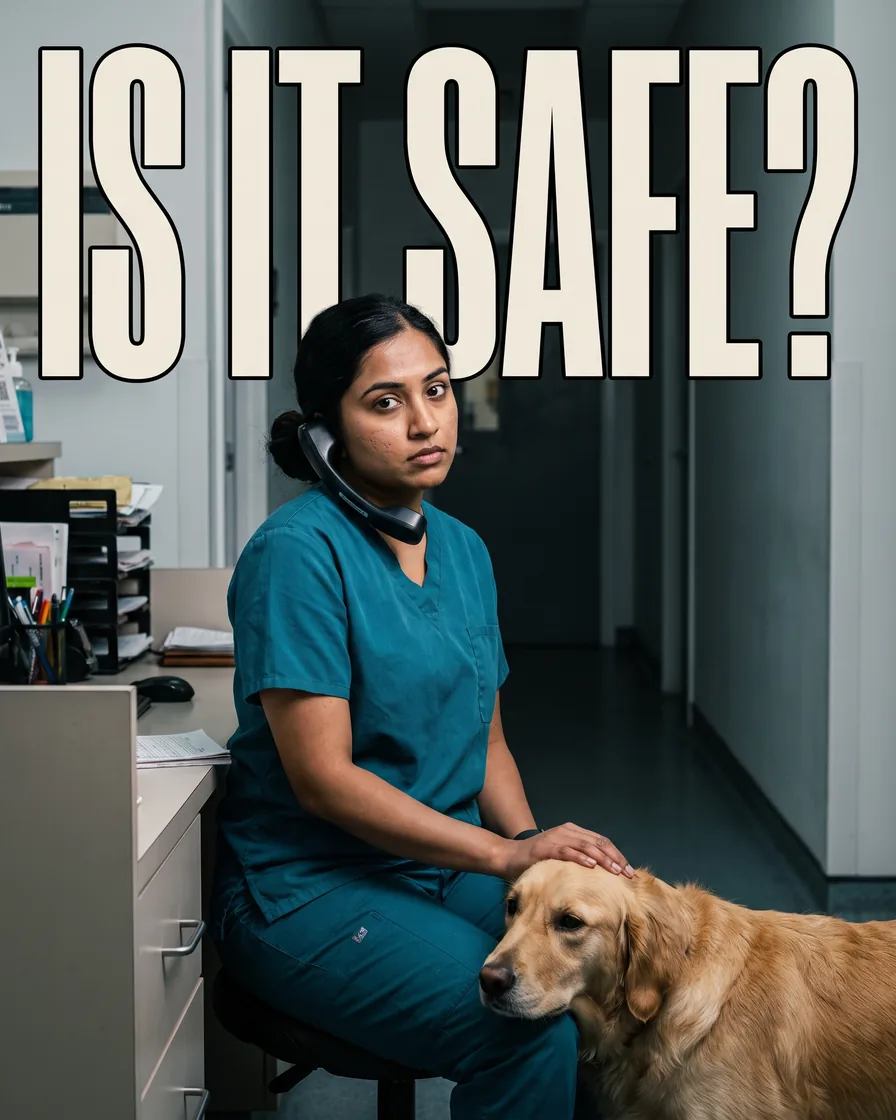
Is it safe to let AI answer your vet clinic's phone?
It can be safe for booking, moving visits, and taking messages, as long as every call about a sick or hurt pet goes to a person. The rules you write decide that.
The short answer
It can be safe to let AI answer a vet clinic's phone for the routine calls: booking a visit, moving or canceling one, giving hours and directions, and taking a message. It is not safe to let AI decide whether a pet needs care. So the setup has to do one thing without fail: any caller describing a sick or hurt pet goes to a person, or to the emergency line you use, right away. If you can't make that rule stick, don't switch it on.
The calls AI can reasonably handle
A clinic phone gets many calls that follow the same steps every time:
- Booking a wellness visit or vaccine appointment.
- Moving or canceling a visit.
- Hours, directions, parking, what to bring.
- A refill request or a question about a recent visit, written down for your team to handle. Not approved, not answered.
- After-hours callers who want to book or leave a message.
These are where a phone agent helps: callers get an answer instead of a ring-out, and the change is in the book before the call ends.
Floor vote
How would you feel calling a vet clinic and getting an AI?
One vote per device. Change it any time.
Loading votes…
The calls AI should never decide
Anything about how sick a pet is, what to give it, or whether it can wait until morning. That's clinical judgment, and it belongs to your vets and nurses. Write the rule plainly, in words the system can follow:
If the caller describes a pet that is sick, hurt, or in
trouble, or sounds worried about their pet's health, do not
give advice. Say you are connecting them to [PERSON OR LINE]
and do it now. If no one answers, give them [EMERGENCY
HOSPITAL NAME AND NUMBER].
Fill in the brackets with your real on-call person and the emergency hospital you refer to. Your team decides those, not the vendor.
AI handles | A person handles
AI handles
Booking, moving, and canceling visits. Hours and directions. Writing down refill requests and messages.
Same steps every time.
A person handles
Any call about a sick or hurt pet. Medication questions. Anyone who asks for a person.
Sent on right away, no advice given.
The honest downsides
- Some callers hang up on an AI. That's real. Keep a person answering first during open hours, and let the agent take after-hours calls and the ones that ring out.
- It can mishear. Pet names, breeds, and last names get garbled. It should read details back to the caller.
- Worried owners are upset. A calm, short script matters more than a clever one.
- People should know. Decide whether it says it's an AI at the start. Many clinics will want it said.
What to ask before you sign up
- Does it book into the calendar we already use?
- Show me exactly what happens on an urgent call. Can I hear it?
- What does it write down, and where does that note go?
- What does it say when it doesn't understand?
- Who can change the rules, and how fast?
- Can we run test calls before any client hears it?
Test it like a client would
Before going live, have your team make a set of scripted calls: a booking, a reschedule, a caller who won't give a last name, someone who demands a person, and an urgent call. Listen to every recording. Fix the rules, then test again.
It also helps to write down your real answers first. A one-page answer sheet gives the agent, and every new hire, the same true answers.
Where Deeplathe fits
Deeplathe builds this kind of phone agent for clinics. The front desk answers first during open hours. The agent takes after-hours calls and the ones that ring out, books and moves visits in your calendar, and hands an urgent call to the person you named. It doesn't diagnose. Here's how it works for veterinary clinics.
Field check
Field check
Three questions. Honest answers. No score sent anywhere but this page.
01 / 03
Have you written the rule for urgent calls?
Short close
Let AI handle the routine calls. Send every call about a sick or hurt pet to a person, keep a human answering first during open hours, and test it with real scripted calls before any client hears it.
Keep these
The working rules
AI is fine for the routine calls and wrong for the urgent ones. Then: List what it may handle; Send every urgent call to a person; Keep a person on the desk; Test it before you trust it.