67 / 68
Tickets into FAQ
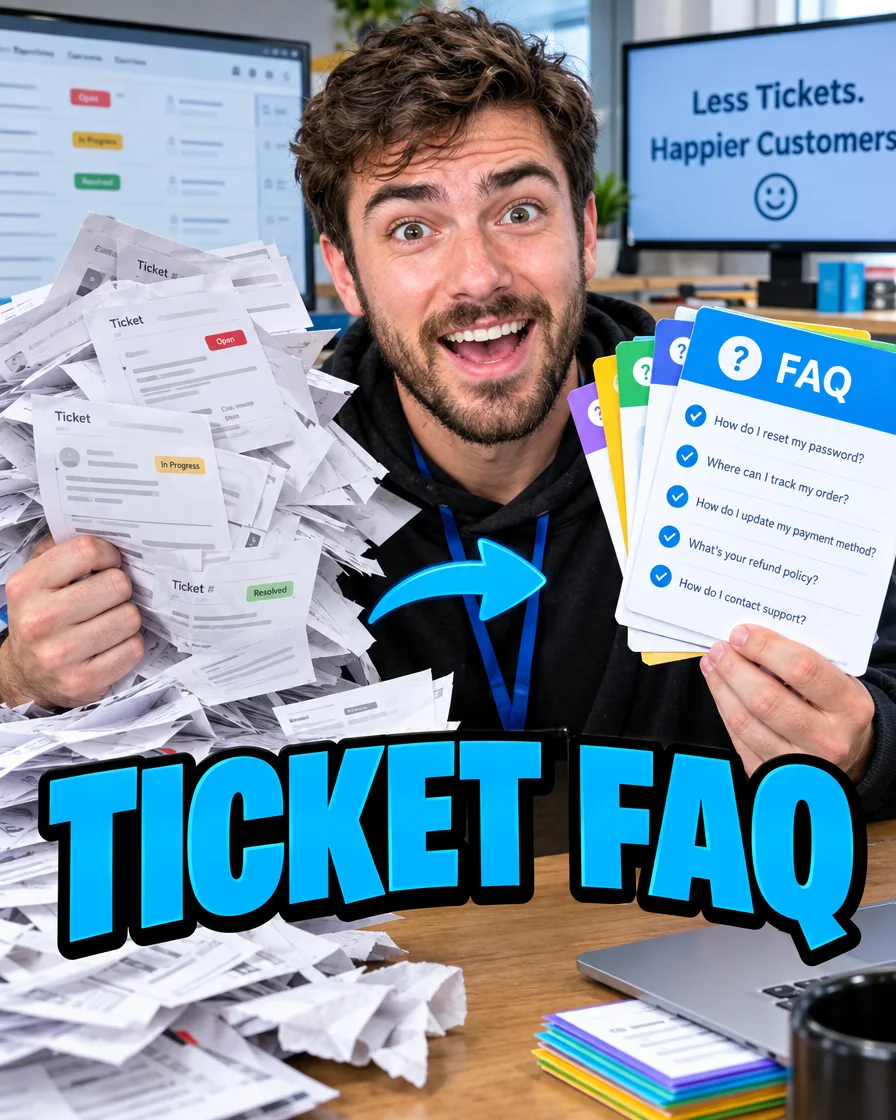
Turn support tickets into a searchable FAQ with AI
Cluster tickets, draft FAQ answers, then a human approves before customers see them.
What you will be able to do
You will turn a pile of support tickets into a searchable FAQ draft—with humans approving every answer before customers see it.
The job
Support teams answer the same questions in slightly different words. A language model can cluster themes and draft FAQ candidates. It cannot invent your refund policy or ship an answer you never approved. Related: notes to SOPs and customer email drafts.
Floor vote
Where are you with this job?
One vote per device. Change it any time.
Loading votes…
Step 1: Export a clean sample
Pull a recent slice you can stand behind:
- Last 30–90 days of tickets (or a random sample if volume is huge)
- Fields: subject, body, resolution note if you have one, product area tag
- Strip or redact customer names, emails, order IDs, payment details before any text enters tools
Redact first. Clustering second.
Step 2: Cluster themes without writing answers yet
Prompt pattern:
Cluster these redacted tickets into themes.
For each theme: name, example subjects (3), rough count, whether resolution notes agree.
Do not write public FAQ answers yet. Mark conflicting resolutions as [CONFLICT].
You want a map of repeated pain—not pretty prose.
Step 3: Draft FAQ only for themes you own
For each stable theme with a clear internal resolution:
Draft one FAQ item: Question (customer words), Short answer, When to contact support instead.
Use ONLY the resolution notes and policy blurbs I provide.
If policy is missing, write [NEED policy]. Do not invent timelines or refunds.
Provide the real policy lines. The model formats; you supply grounded truth.
Step 4: Human review gates
Before anything goes public:
- Support lead checks factual accuracy
- Someone who owns policy checks promises
- Tone check against your voice card
- Link check (help center URLs, status page)
No gate, no publish. Speed without gates creates new tickets.
Step 5: Publish where search happens
Put approved FAQs where customers already look:
- Help center
- In-product help
- Support macros / canned replies
- Optional public blog only if the answer is truly public
Name versions with dates. Retire stale answers when policy changes.
Keep the loop alive
Weekly or biweekly:
- Pull new tickets tagged “FAQ miss”
- Cluster only the misses
- Update or add FAQ items
- Note which macros still contradict the FAQ
A FAQ that never eats new tickets becomes fiction. For ops review habits, see weekly AI ops review.
What not to automate
- Legal threats and chargeback disputes
- Safety / abuse edge cases without a human
- One-off enterprise contract terms
- Anything that needs account-specific data to answer
Those stay ticket workflows with people.
Worked example (pattern only)
Fifty tickets mention “change my booking time.” Resolution notes agree: self-serve link + 24-hour cutoff. The draft FAQ cites that cutoff because you provided it. Ten tickets mention “custom refund.” Notes conflict. Those stay [CONFLICT] until policy owns a sentence—no public FAQ yet.
Metrics that matter
- Share of tickets matching an FAQ theme
- Time to first response on those themes after FAQ ships
- Correction rate (how often you edit the FAQ after publish)
- New themes rising this month
Skip vanity like “number of model drafts generated.”
How a five-person team runs this week
Export and redact a manageable ticket sample on Monday. Cluster themes on Tuesday without writing public answers. Wednesday: draft FAQ only for themes with clear policy text. Thursday: support + policy gate. Friday: publish two or three items max and tag new tickets that still miss. Resist shipping a twenty-item FAQ in one burst—accuracy beats coverage theater.
Pair with voice and email habits
FAQ answers should match the same voice card you use for support macros and outbound mail. If the FAQ sounds like a different company than your email drafts, customers feel the seam. Reuse the approved voice file; do not let FAQ drafts invent a warmer, promise-heavier brand.
Macro alignment
After FAQ items publish, update the matching support macros the same week. Customers hate a help-center answer that disagrees with the reply they just received. If macros and FAQ diverge, the FAQ is not done.
Field check
Field check
Four questions. Honest answers. No score sent anywhere but this page.
01 / 04
Can you name the one job this piece is for, in one sentence?
Short close
Cluster, draft from real policy, gate with humans, feed misses back weekly—that is tickets to FAQ without inventing answers.
Keep these
The working rules
Cluster tickets, draft FAQ answers, then approve before customers see them. Then: Ground the brief; Constrain generation; Keep humans on decisions; Reuse the owned template.