64 / 68
Resume screening
Use AI to help organize resume screening without silent bias traps
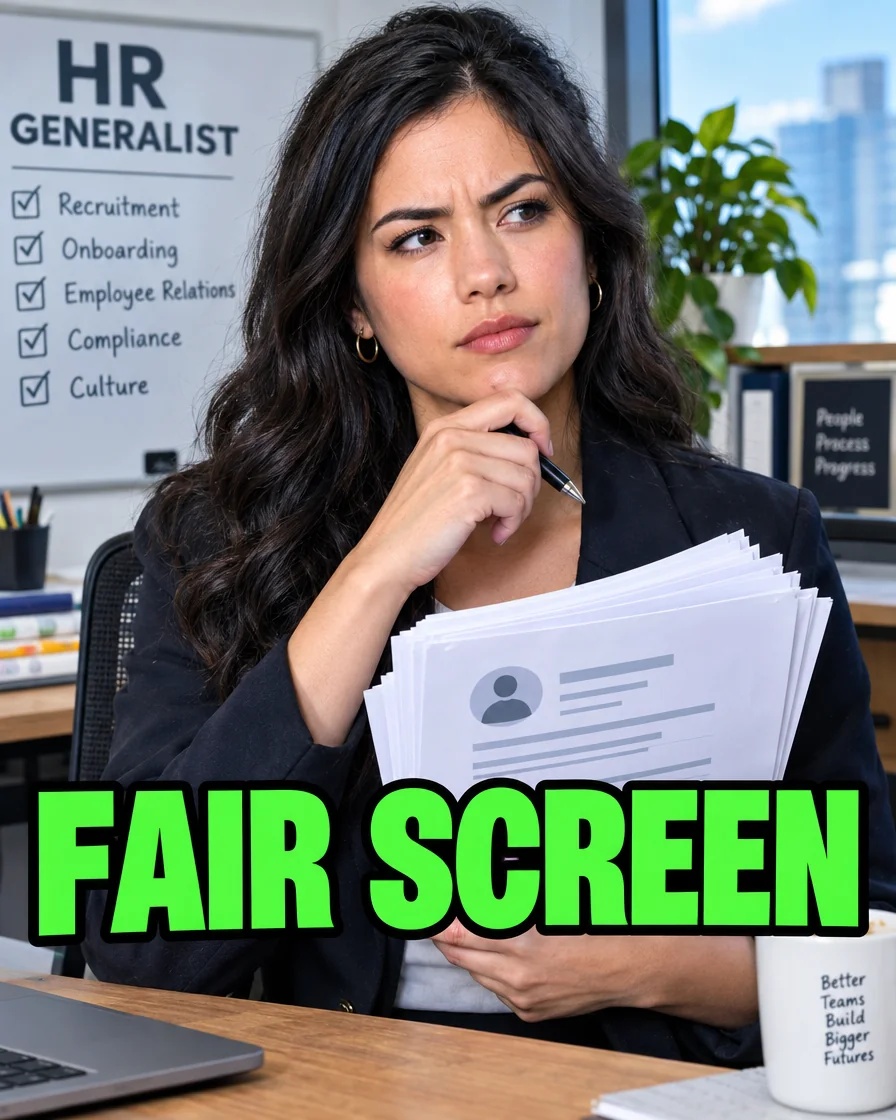
AI can sort and summarize. Humans still decide who advances.
What you will be able to do
You will use AI to help organize resume screening without turning the model into a silent judge that encodes bias or invents knock-out rules.
The honest limit
Resume screening is high-stakes. A language model can:
- Reformat messy resumes into a common skeleton
- Extract stated skills against a job brief you provide
- Flag missing required sections (e.g. no contact info)
It should not:
- Invent a “culture fit” score from vibes
- Infer protected attributes and use them
- Auto-reject people without a human path
- Replace your published criteria with clever new ones
This article is practical hygiene, not legal advice. If hiring rules in your region are strict, talk to counsel before you automate ranking. Related: risks and will AI replace my employees.
Floor vote
Where are you with this job?
One vote per device. Change it any time.
Loading votes…
Start from a frozen job brief
Screen against a written brief—not against “what good engineers look like.”
Use the brief from AI-assisted job briefs: must-haves, nice-to-haves, anti-requirements. Paste that brief into every screening prompt. If the brief changes mid-pipeline, you re-score fairly—or you admit the process reset.
A safe assist pattern
For each resume:
Using ONLY the job brief below and the resume text:
1) List must-have skills that appear with evidence quotes
2) List must-haves with no evidence ([MISSING])
3) List nice-to-haves present
4) List unclear claims that need interview clarification
Do not score personality. Do not infer age, gender, nationality, or health.
Do not invent employers or degrees.
You get a structured worksheet. A human still decides advance / hold / reject.
Ban proxy criteria you did not publish
Models will happily overweight:
- Prestige school names
- Big-brand employers
- “Native English” vibes from writing style
- Gaps they narrate as failure
If those are not explicit, approved criteria, strip them from prompts and from your reading. Ask: “Ignore school names and employer brand. Compare only to must-haves.”
Keep humans on the reject path
Rules that reduce harm:
- No auto-reject from the model alone
- Spot-check a sample of “no” recommendations each week
- Same worksheet format for every candidate
- Document why a human advanced or rejected (one line)
Speed that you cannot explain is how discrimination claims and bad hires both arrive.
Blind where you can
Practical steps:
- Review the model worksheet before you open social profiles
- Delay photo and demographic fields if your ATS allows
- Separate “contact logistics” from “skills evidence”
Blinding is incomplete online. Still worth reducing early bias wherever the process allows.
Data handling
Resumes contain personal data.
- Use approved business accounts
- Do not paste full candidate packets into random consumer tools
- Delete chats you do not need
- Follow your retention rules
See customer data and AI tools—candidates deserve the same care.
Worked example (pattern only)
Must-haves: TypeScript, API design, on-call comfort. A resume shows TypeScript and API work; on-call is unclear. The worksheet marks on-call [MISSING] and lists a clarification question. It does not invent “not a culture fit.” A human advances to a screen call with that one question ready.
What to measure instead of vanity
Track:
- Time to first human review
- Consistency of worksheet completion
- Interview pass rates by source (watch for weird skew)
- False discards you catch in spot checks
Do not track “AI confidence.” Confidence is not fairness.
How a five-person team runs this week
Freeze the job brief before you touch resumes. Build the worksheet prompt once and save it next to the brief. Screen ten real applications with the same format. Spot-check two “no” calls as a pair. At week’s end, ask whether the worksheet saved time without inventing knock-outs. If the model keeps adding culture language, delete those lines from the prompt and re-run—do not negotiate with the vibe.
Pair with the job brief article
Bad screening usually starts as a bad brief. If must-haves are fuzzy, the worksheet will be fuzzy. Freeze the brief, then screen. If you change must-haves mid-search, restart the worksheet rules and tell candidates the bar moved—do not silently rescore with a new invented list.
Field check
Field check
Four questions. Honest answers. No score sent anywhere but this page.
01 / 04
Can you name the one job this piece is for, in one sentence?
Short close
Structure and evidence in, personality scores out, humans on every reject—that is screening help without bias theater.
Keep these
The working rules
AI can sort and summarize. Humans still decide who advances. Then: Follow the steps in the article; Keep humans on final decisions; Skip invented facts; Reuse the same brief next time.