Samples
You're here because the homepage felt too good to be true.
Fair. So here is everything we have built, in the two piles it actually comes in: ten samples we made ourselves to show the range, and a shorter list of work built for businesses that exist. Neither is dressed up as the other. Take your time.
Skip to the work built for real businesses →Ring it. It answers. Describe a job the way one of your customers would, and judge the thing you would be paying for rather than the page describing it.
Samples
Eight builds, in eight trades.
These are ours, made to show the range. Every one is live; click through and use it.
The businesses in them are invented — the people, the reviews and the figures on those pages are not real, and each site says so at the top of its own page. What is real is the build: the pages, the speed, the booking, the agent picking up.
 Sample
Law firm · Boston
Website + AI intake
Ashford & Kline
Boutique litigation and corporate firm — a numbered case-results ledger, scroll-driven film, and a confidential AI intake coordinator.
Open the live site→ Sample
Coffee roaster · Seattle
Website + store
Halcyon Coffee Roasters
Small-batch roaster and café — shop by origin on an interactive coffee belt, subscriptions, and an AI barista who dials in your brew.
Open the live site→ Sample
Auto repair · Detroit
Website + AI service desk
Ironside Auto Works
Independent ASE-certified shop — flat-rate work orders, a scroll-scrubbed dyno power curve, and an AI service writer that books bays.
Open the live site→ Sample
Veterinary · Boulder
Website + AI triage
Wildwood Animal Hospital
Neighbourhood animal hospital — services, care guides, and an AI agent that triages worried pet owners and books visits.
Open the live site→ Sample
Real estate · Austin
Website + AI concierge
Meridian & Co.
Boutique brokerage organised by the block — an interactive neighbourhood index, live listings, and an AI concierge for valuations.
Open the live site→ Sample
Restaurant · Asheville
Website + reservations
Ember & Oak
Wood-fired kitchen — a living menu, table reservations, and an AI host that takes bookings while the pass is slammed.
Open the live site→ Sample
Strength gym · Miami
Website + AI front desk
Cadence Strength Club
Coach-led strength club — horizontal-scrolling programmes, the class board, and an AI front desk that books free sessions.
Open the live site→ Sample
Hair salon · Portland
Website + AI booking
Fable & Mane
Editorial hair salon — stylist portfolios, service menu, and an AI receptionist that fills the empty chair.
Open the live site→Built for a client
Work for businesses that exist.
A shorter list than the one above, and the one that counts. A development-management firm in New York, and the rest in Rīga — most of them in Latvian. Every name here is a business you can look up.
Several open on a deeplathe.com preview address rather than the business's own domain, because that is where the build lives.
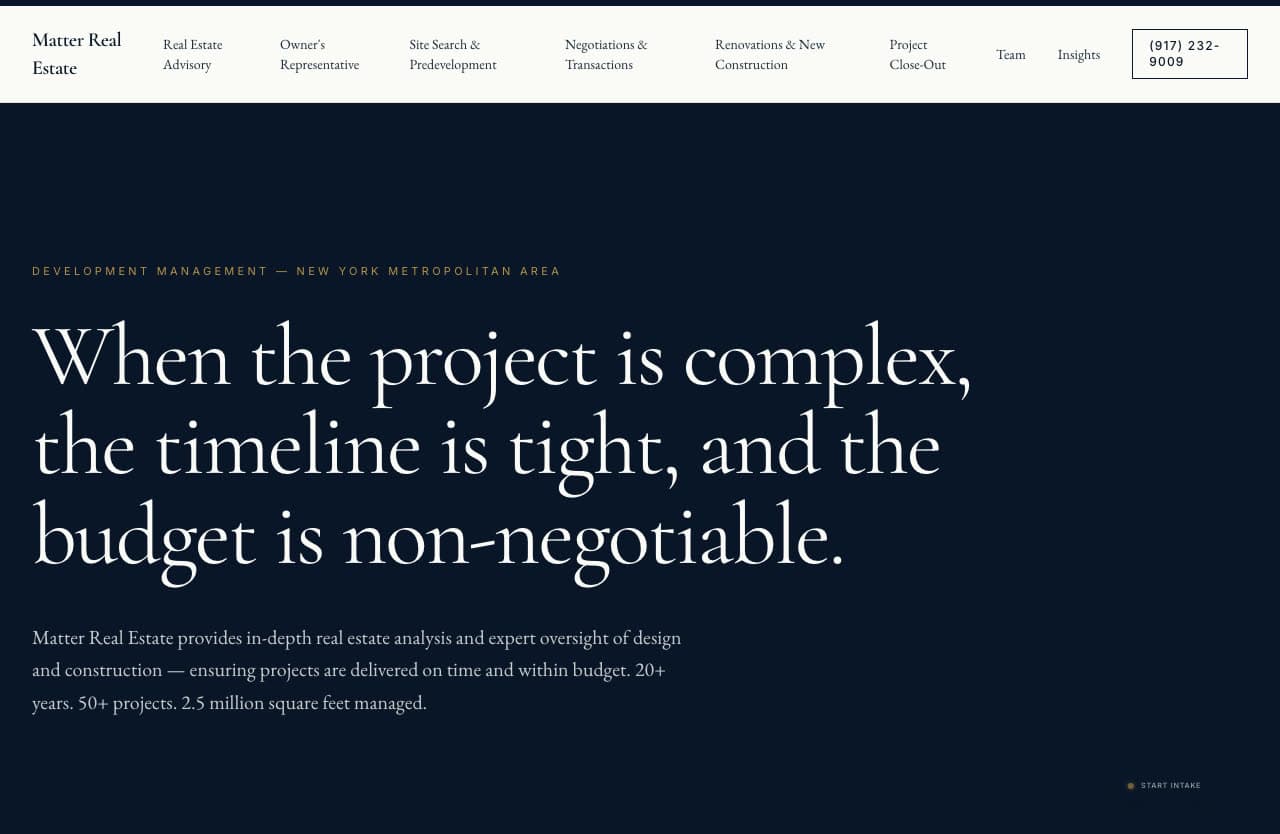
Development management · New York
Website + insights
Matter Real Estate
Advisory, owner's-rep and predevelopment work, with the project record laid out as case studies rather than a gallery.
Open the build→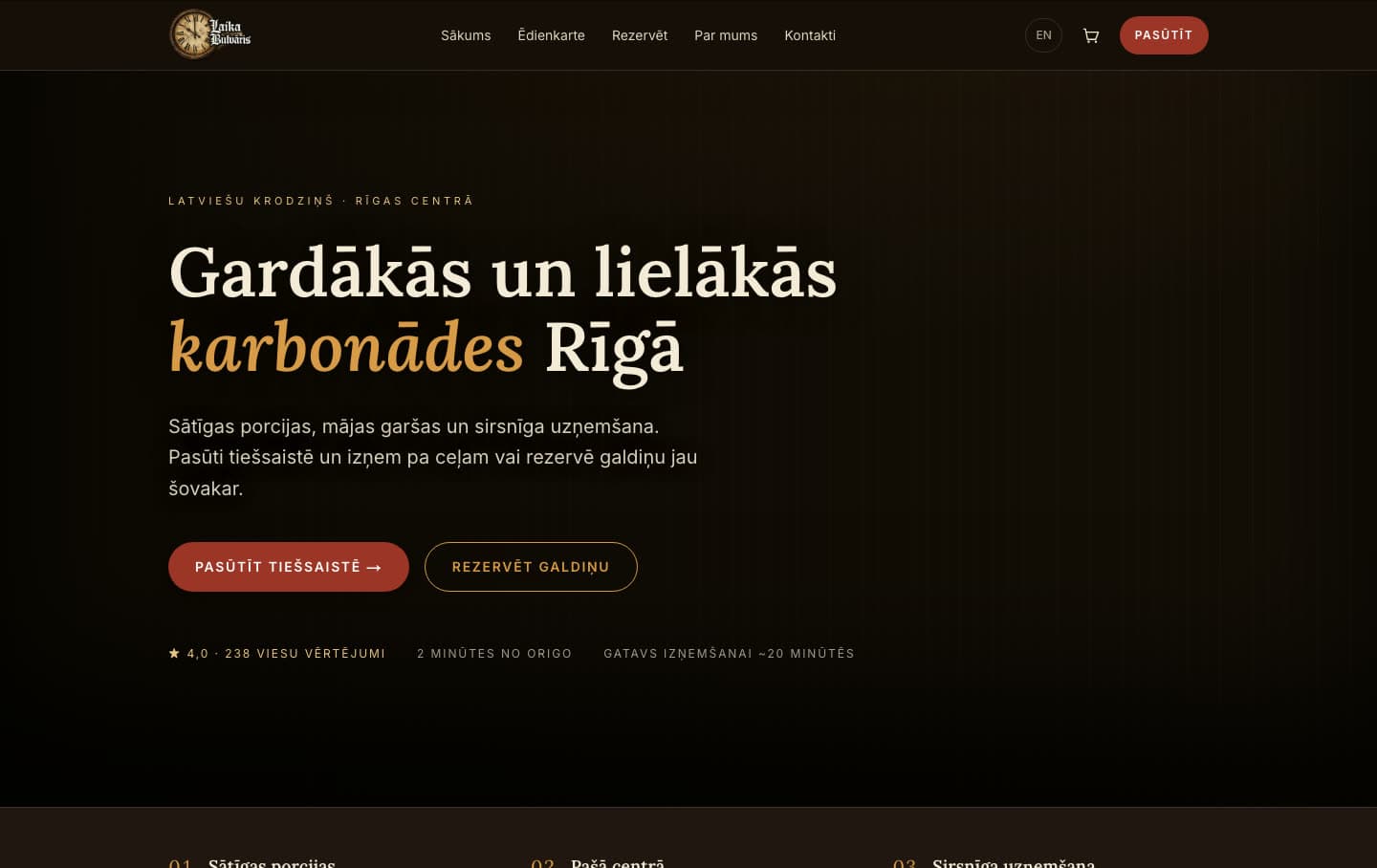
Tavern · Rīga
Website + ordering
Krodziņš «Laika Bulvāris»
A Latvian tavern on Raiņa bulvāris — the menu, online ordering and table reservations, in Latvian and English.
Open the build→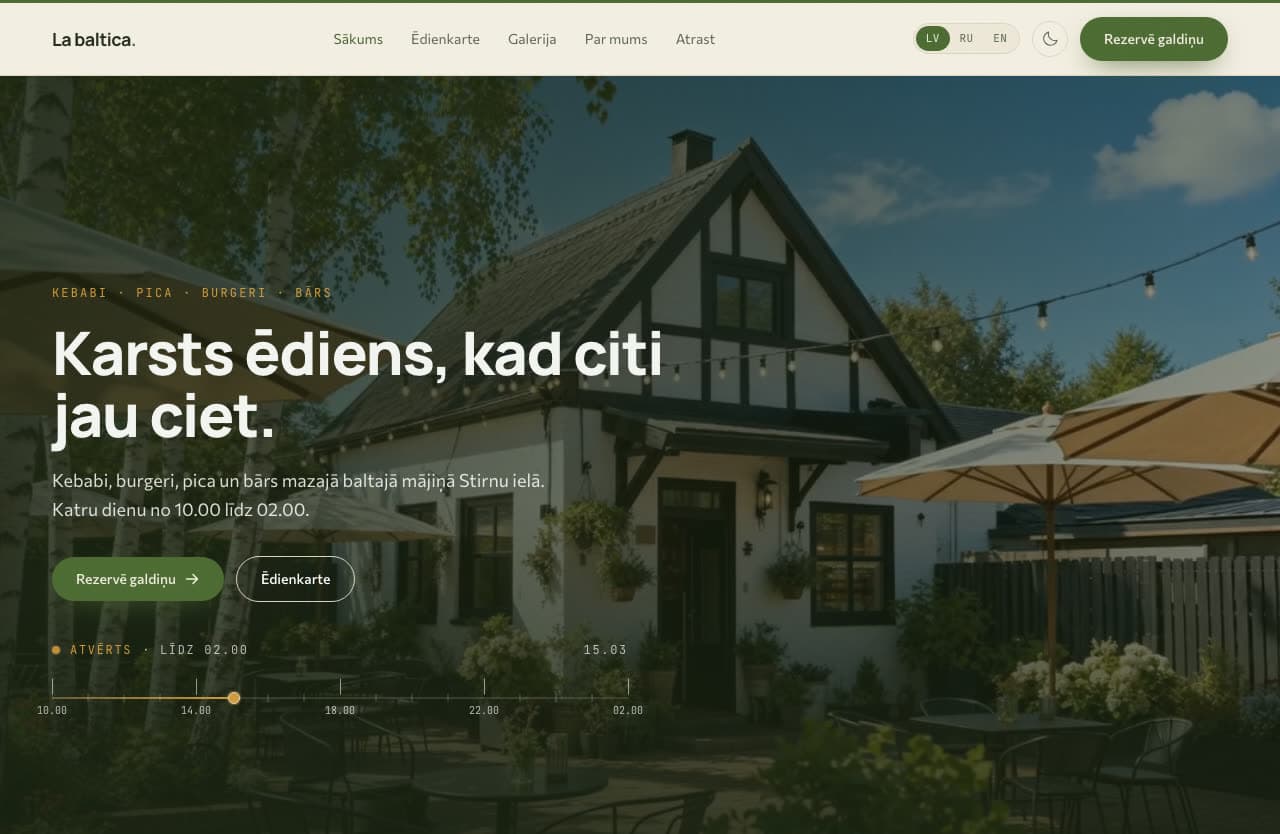
Late-night bistro · Rīga
Website + reservations
La Baltica
Kebabs, pizza and burgers until two in the morning — the hero carries a live clock strip showing whether the kitchen is still open.
Open the live site→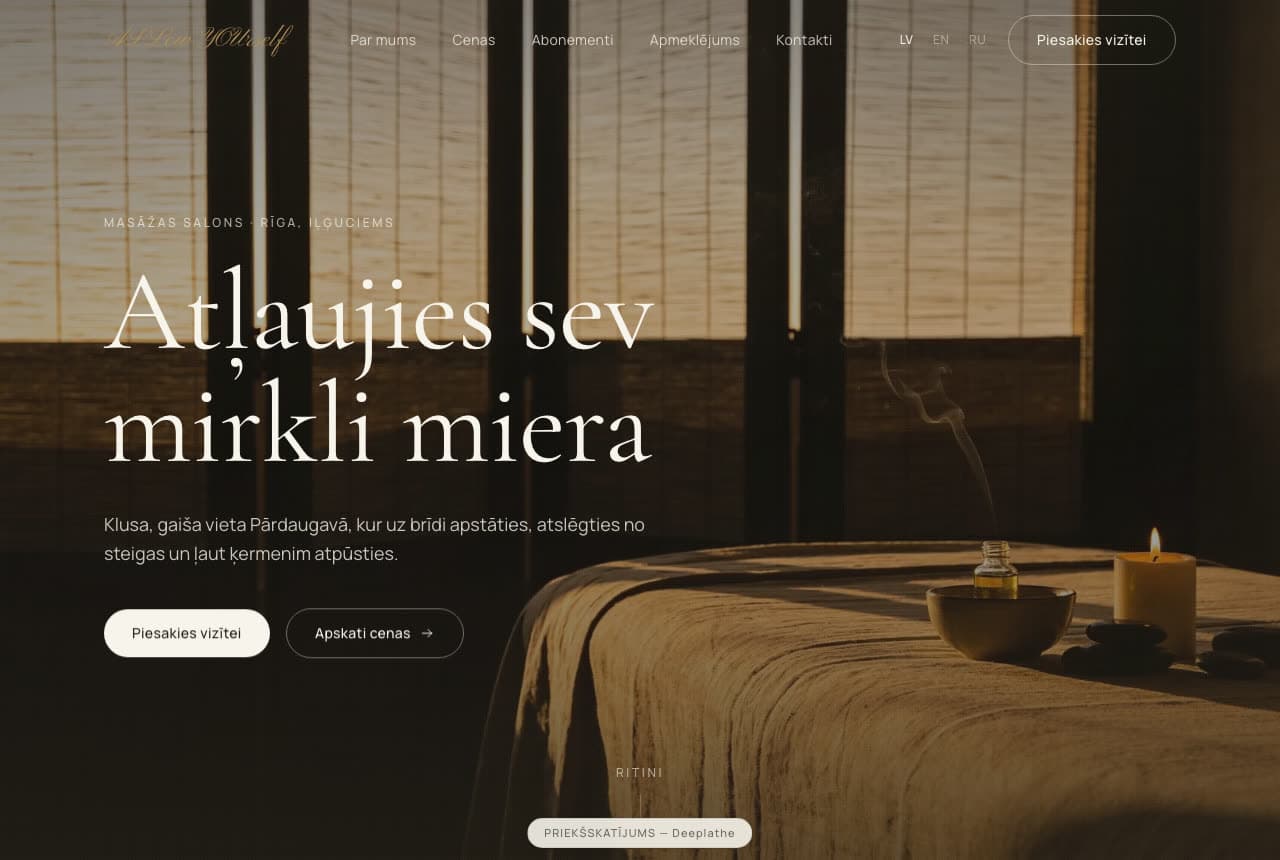
Massage studio · Rīga
Website + booking
Atļaujies
A quiet studio in Pārdaugava — prices, memberships and appointment booking, in Latvian, English and Russian.
Open the live site→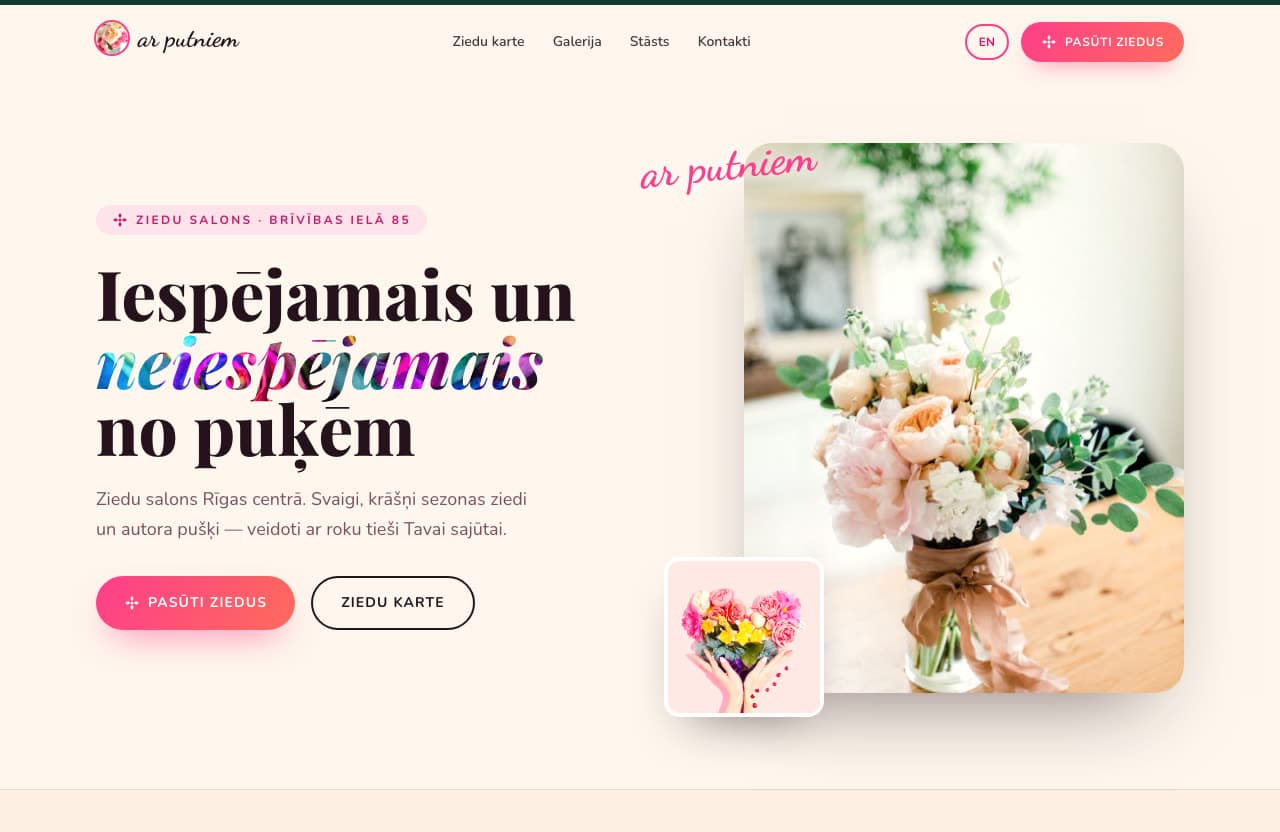
Flower salon · Rīga
Website + ordering
Ar Putniem
A flower salon on Brīvības iela — seasonal bouquets, with orders taken online instead of over a busy counter.
Open the build→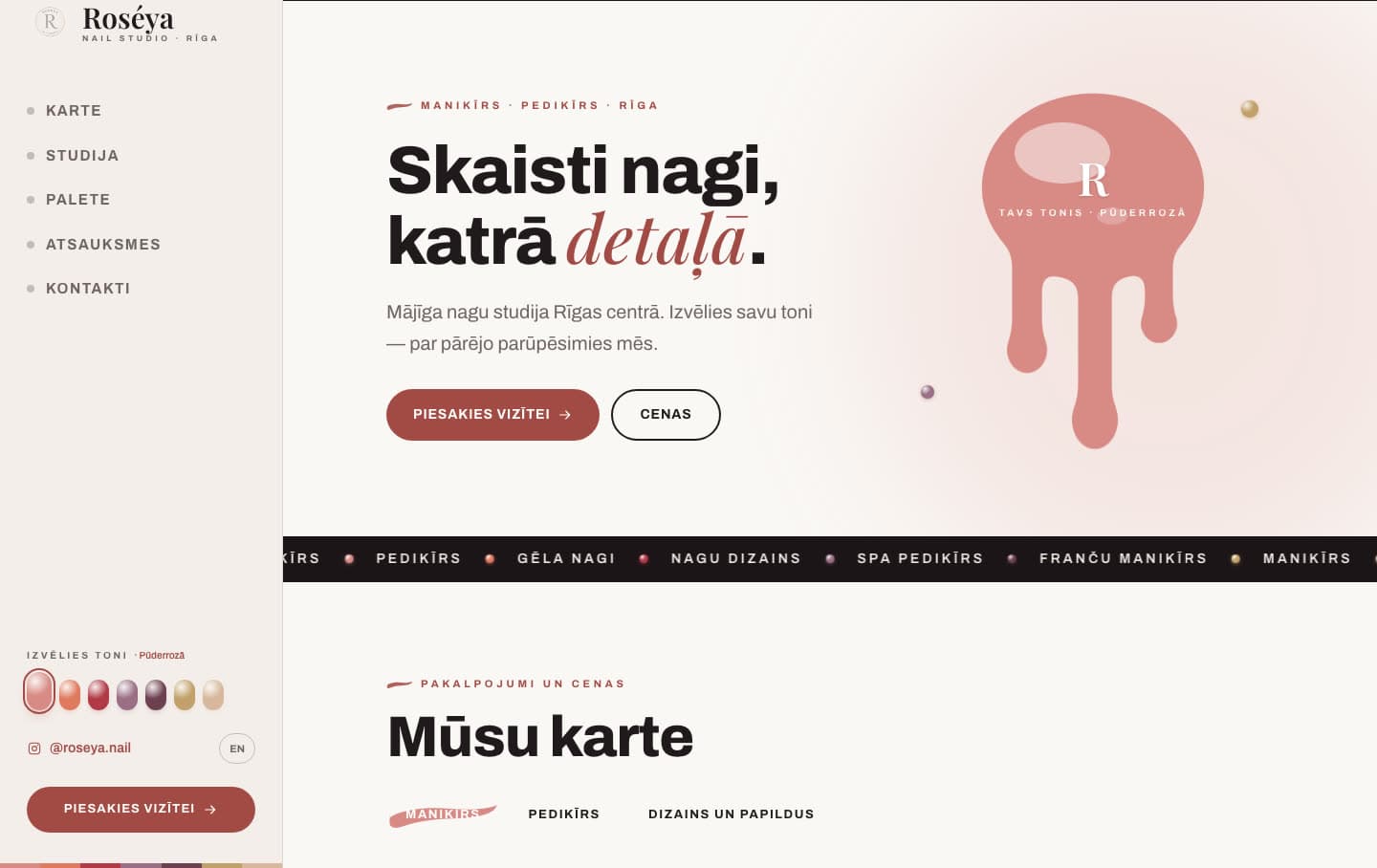
Nail studio · Rīga
Website + booking
Roséya Nail Studio
A nail studio with a live shade picker built into the page, so the colour conversation starts before the appointment does.
Open the build→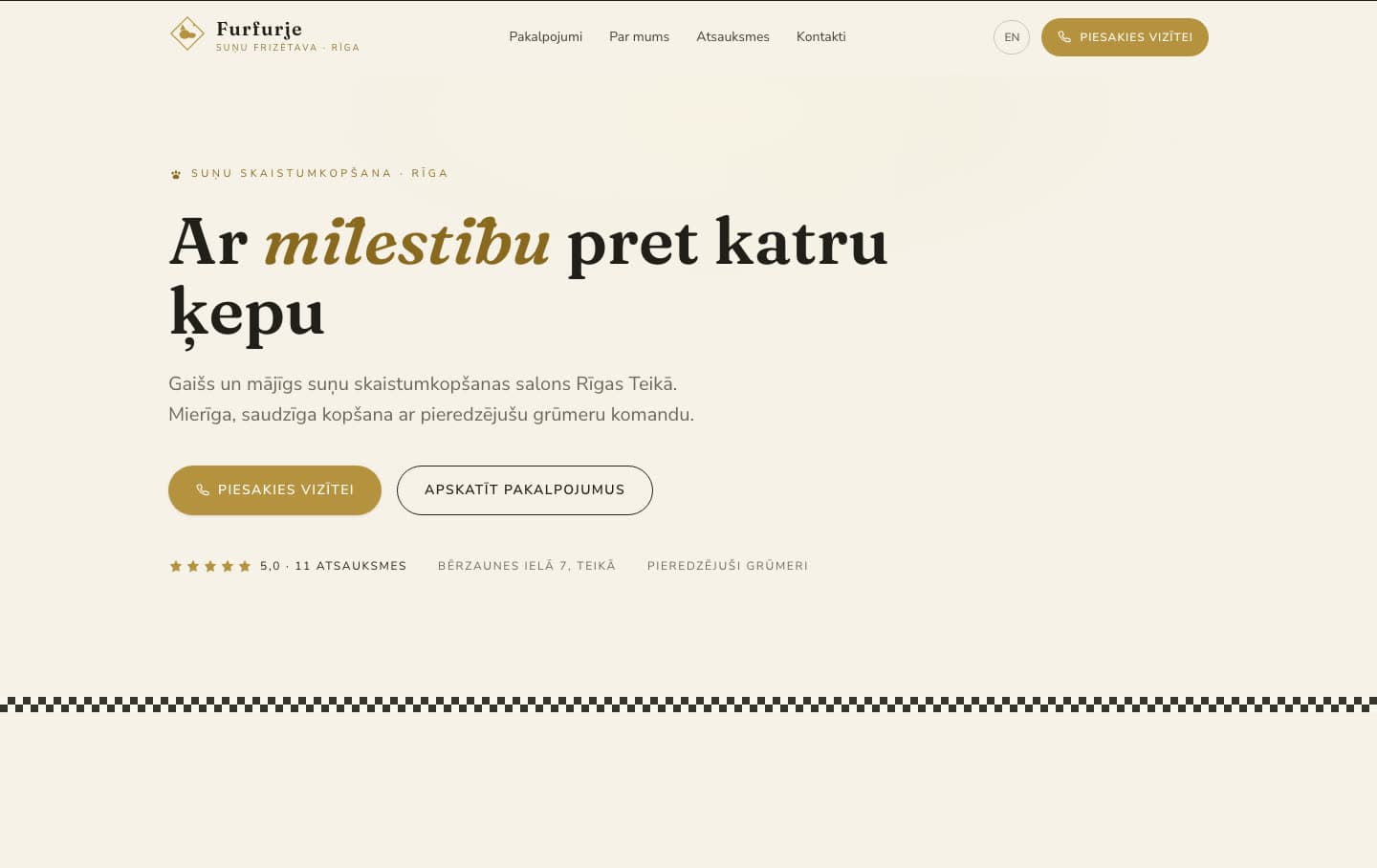
Dog grooming · Rīga
Website + booking
Furfurje
A grooming salon in Teika — the service list with from-prices, and booking, bilingual in Latvian and English.
Open the build→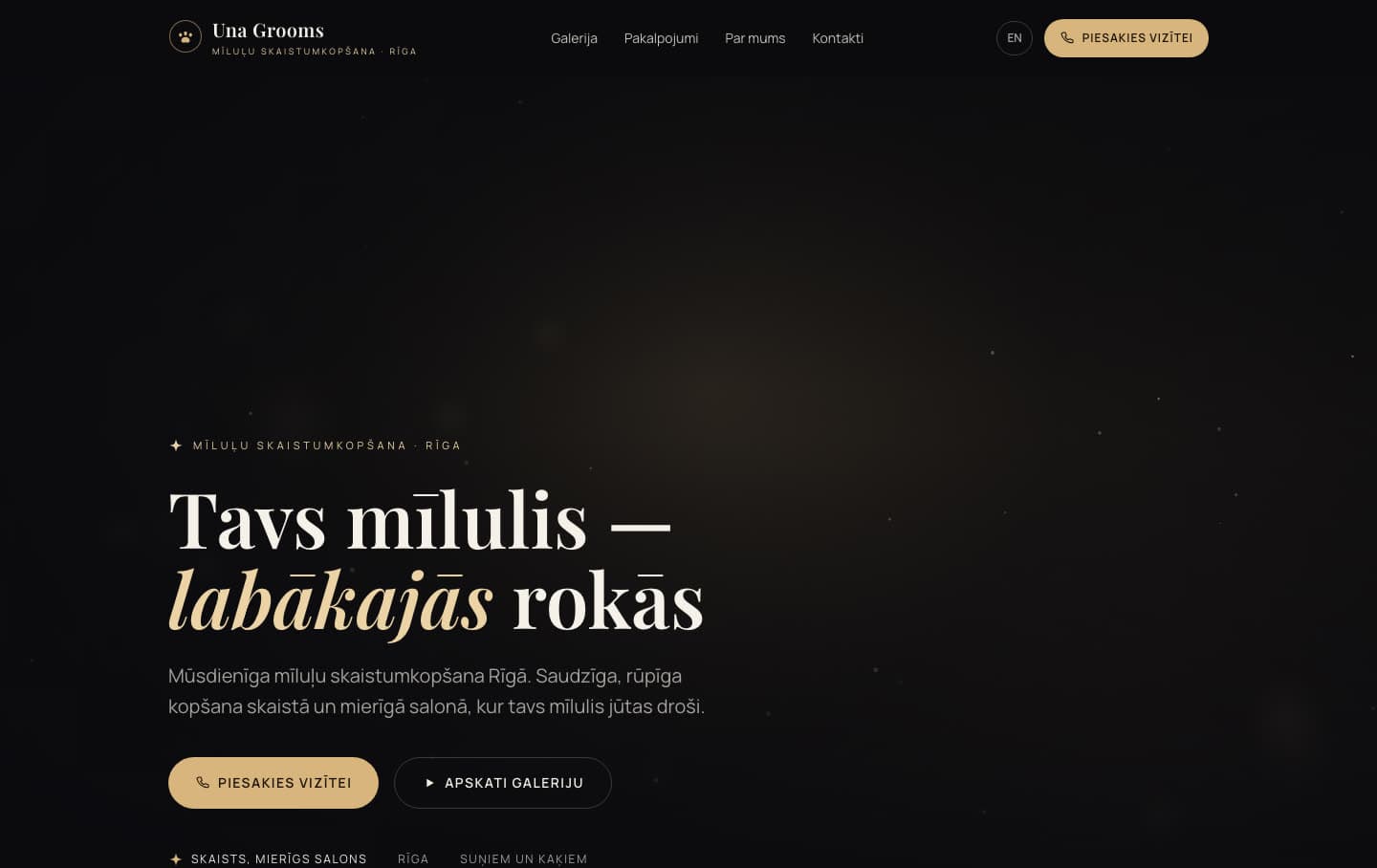
Pet grooming · Rīga
Website + booking
Una Grooms
A pet salon in Rīga — a calm, filmic page with the service list and booking one tap from the top of the screen.
Open the build→Evidence
The numbers we can prove.
No invented statistics. What answering your phone costs today, from named public sources, with our plain reading of each. Follow the links.
~$3,100/mo
A full-time receptionist in the US costs about that in base wages alone, at the $17.90/hour national median.
And that is before payroll taxes, benefits, holidays and sick cover, which typically push it past $3,900. A person also works one shift, not nights and weekends.
US Bureau of Labor Statistics (Occupational Outlook Handbook, receptionists) · May 2024~$5 a minute
What a human answering service charges at entry level. Ruby's cheapest plan is $250 for 50 handled minutes a month.
Fifty minutes is under two minutes a day. Run out and every extra minute is billed. Those services take a message; they do not book into your calendar or answer at 2am.
Ruby · 2026from £30/mo
Where UK phone answering starts, for appointment scheduling, with per-minute charges above a small included allowance.
The entry price is low, but it is a floor, not the all-in cost. Real spend climbs with call volume, and cover is still limited to staffed hours.
ReceptionHQ (UK) · 2026That is the gap: always answering, for a fraction of what a person costs. We do not claim what you will earn from it — only what the alternative costs, and what the work above looks like.
Seen enough of the work? The next step is a phone call, not a form.
+1 (646) 212-0980Prices are on one page, and what we do is on another. Nothing is gated.